
Start here
Before you fund a forex account, get the shape of the trade
Updated . Figures on this page are examples.
If you have only seen forex as a red button and a green button, the first useful fact is dull on purpose. You are probably not buying a suitcase of dollars.
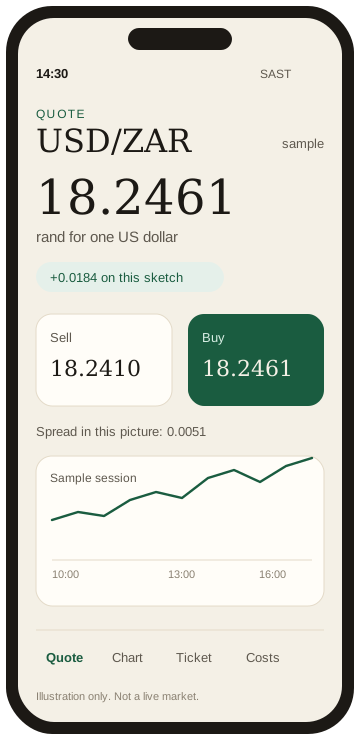
You are buying a contract, not a bundle of notes
With most retail accounts in South Africa you take a contract whose price tracks a currency pair. When that contract is a CFD, you never own the currency. You gain or lose as the pair moves, and you pay to hold the position overnight. The confirmation, the cost disclosure and the client agreement say which wrapper you have. Read those before you read the next advertisement.
How to read the two currencies
USD/ZAR is read as rand per dollar. The first currency is the base. The second is the quote. If the price is 18.25, one dollar costs 18.25 rand. If that price rises, the dollar bought more rand, which means the rand weakened. People mix this up, then wonder why a “good day for the country” went against the position they took.
The same reading works for EUR/ZAR and GBP/ZAR. It does not work unchanged for EUR/USD, because the rand is not in that price at all. There is a longer version in the guide to the pairs.
Spot and CFD are not the same purchase
A bank spot deal can settle the currencies. A contract for difference settles the change in price. The screen can look identical. Your recourse, your costs and the licence the firm needs are not identical. If a salesperson says “it’s all the same”, ask them to point at the clause that names the product.
Put the rand back into the arithmetic
Course notes written in New York often assume the account is in dollars. If yours is in rand, a profit counted in pips still has to land in rand, and a pair that is not quoted in rand may need a conversion on the way. The pip-value box on the ticket is the number that matters. The cost guide walks through a tenth of a lot so the arithmetic stays small enough to check by hand.
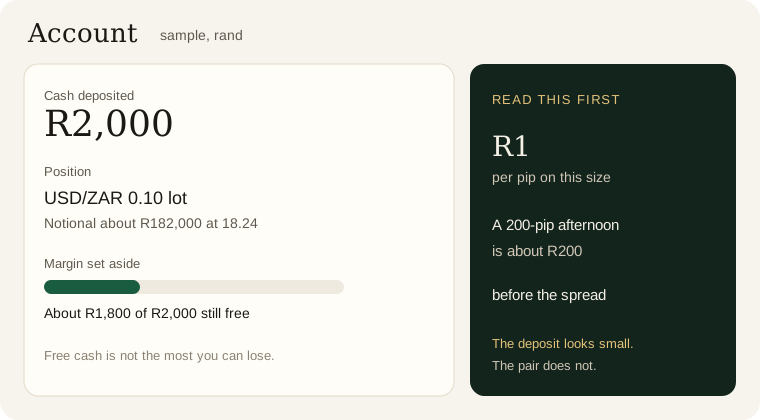
Here is the mismatch in one picture. R2,000 in the account, 0.10 lot on the ticket. The position is not “a two-thousand-rand trade”. At a USD/ZAR price near 18.24, that tenth of a lot is on the order of R180,000 of the pair. Margin is the slice the firm holds back so the position can stay open. If the price gaps, the slice is not a ceiling on the loss.
A slow first month
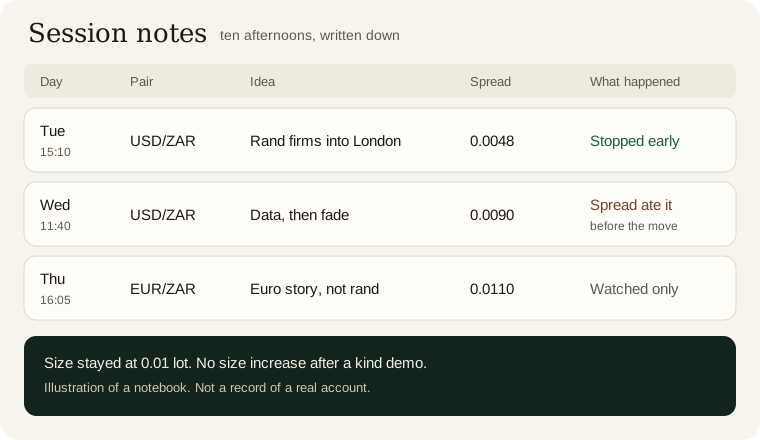
Open a demo only after you know which firm you would use live, so the demo’s spread looks like the live one. For ten sessions, write down the pair, the direction, what you thought would happen, and the spread at the moment you entered. Do not increase size because a demo went well. Demo fills are kinder than live ones, especially around a local data release.
A standard lot on USD/ZAR is typically 100,000 dollars of notional. You do not need that. A hundredth of a lot is the right neighbourhood for finding out whether you can follow your own notes. Notional value, not the cash you deposited, is what the market pushes against.
The notebook is the part people skip. Without it, a week later you remember the one afternoon that worked and forget the three where the spread was the whole story. Write the time in SAST, because a trade at 15:00 and a trade at 01:00 are not the same market, even on the same pair.
What a local firm will ask for
Expect an identity document, proof of where you live, and a bank account in your own name. A firm that is happy to skip this, or to take a card in someone else’s name, is not doing you a favour. Funding from an offshore account, or sending rands out of the country to a foreign broker, is a separate question for your bank. Exchange-control rules change. Ask the bank what the current Reserve Bank position requires before you wire anything abroad.
Where this guide stops
Nothing here is advice for your tax, your allowance, or the size you should trade. If you are unsure you can afford a loss, do not fund the account. If you want the bill in numbers, read the cost guide next, then how to choose a size and what an order actually does. If you are about to choose a firm, read the licence check first.