
The order
A forex stop is a request, not a locked price
Updated . The levels below are a drawing of the sample quote.
The buttons look decisive. Market, limit, stop, stop-loss, take-profit. Most of the confusion is that the word “stop” is doing two jobs, and that none of them freeze the price.
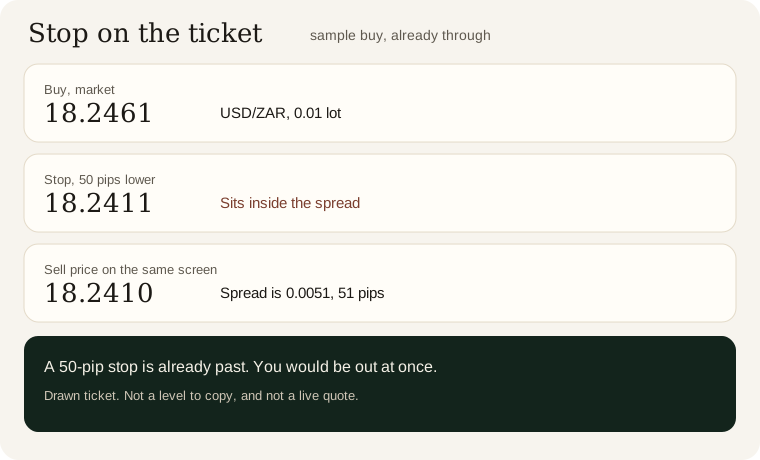
The three orders people mix up
A market order takes the price the firm is offering now. If you buy, that is the higher number. You start the trade behind by the spread, which on the sample ticket is 0.0051, or 51 pips.
A limit order names a kinder price and waits. A buy limit sits below the market. A sell limit sits above it. It may never trade. If it trades while you are out, you still have the position, and you still pay to hold it overnight.
A stop becomes a market order once the price reaches a line. People use it to get in, when they want a break, and to get out, when they want the loss to end. The ticket should say which. If it only says “stop”, read the client note before you assume it is a safety rail.
A stop that is already through
Buy the sample at 18.2461 and place a stop 50 pips lower. Fifty pips is 0.0050, so the stop prints at 18.2411. The sell price on the same screen is 18.2410. You are already through the stop by the spread you just paid. The position does not get a chance to be an idea. It is an exit.
A stop has to live beyond the spread, with room for the price to be a little worse than the line. How far is your decision, and it belongs in rand, which is what the size guide is for. This page is only the shape of the order.
A gap does not stop at the line
From Friday night to Sunday night, South African time, USD/ZAR often has no continuous price. The first print on Sunday can be far from Friday’s close. A stop at 18.20 can fill at 18.05 if that is where the book reopens. The same thing happens, faster, when a local headline lands in a thin hour. The difference between the line and the fill is slippage. A demo that never slips is leaving it out.
That is also how a loss can pass the deposit. Some accounts stop you at zero. Some do not. Ask in writing, and read the short answer before you need the long one.
A target is the same kind of promise
A take-profit is a limit on the way out. The price can jump through it, or touch it and leave you filled, after which the trade is over and the overnight charge for the nights you did hold still stands. A target does not refund the spread. It does not know about the Wednesday triple. Count those before you call the distance “enough”.
What is worth writing down
Pair, market or pending, the price you asked for, the size, the stop distance in pips, and the spread in rand at that moment. If you cannot say those six without opening the ticket again, the order is too large for the attention you are giving it. Nothing here is a level to copy. The numbers exist so the 50-pip mistake is visible.