
The clock
When the rand forex market is actually awake
Updated . Times are South African, and they are a sketch.
A chart that runs all night is not a market that is equally alive all night. From Johannesburg, the useful question is when someone is actually pricing the rand, and when you are looking at a wide spread with nobody behind it.
Sunday night to Friday night
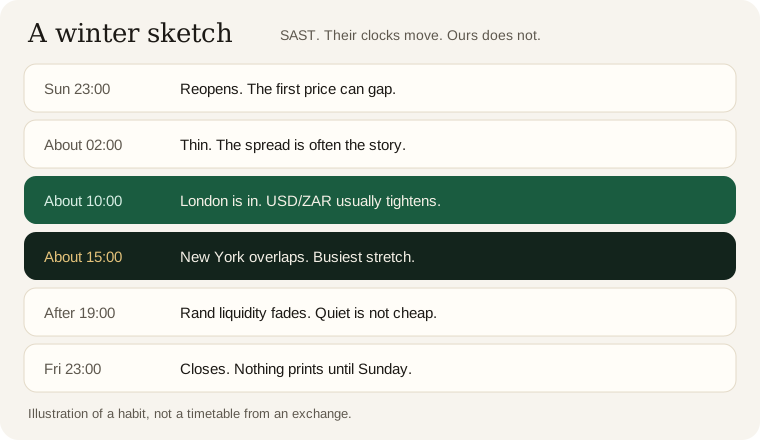
Retail forex in the rand pairs is commonly open from about Sunday 23:00 SAST until about Friday 23:00 SAST. The exact print moves by an hour when London or New York changes clocks. We stay on UTC+2 all year. A session you remember as 15:00 in July can sit differently in January if you were thinking in their time.
Between Friday night and Sunday night there is no continuous price. The chart may draw a straight line. The market did not. The first price on Sunday is allowed to be somewhere else.
Where the spread usually lives
Around 02:00 the book in USD/ZAR is often thin. A quiet screen is not a cheap screen. The spread is the tell, and it can be several times the afternoon gap.
From about 10:00 in winter, London banks are pricing and the rand pair usually tightens. From about 15:00 New York overlaps that book. It is the busiest stretch for many dealers, which means a headline travels fastest then, not that the hour is safe. After about 19:00 local liquidity fades again. If you are learning, the afternoon is the cleaner window. It is still not a promise of a calm day.
Local news moves a wider pair
A Reserve Bank decision, a CPI print, a budget line or a ratings note can move USD/ZAR further than a whole quiet morning. The Bank publishes its own diary. A guide should not pretend to be that diary. What is worth knowing is the habit: the spread often widens before the number, the first print can gap, and a stop is a request. The Reserve Bank site is where the date lives. Your ticket is where the cost lives.
When one city is on holiday
Johannesburg, London and New York do not share a public-holiday list. A day when London is shut and we are not, or the other way around, is usually a thinner book. Spreads widen, stops slip, and a demo from an ordinary Tuesday will not have shown you that. If the point of the session is to learn, a holiday is a good day to watch the spread and a poor day to decide that an idea works.
The weekend is a gap, not a pause
Pending orders and stops stay live across that empty stretch unless you close them. They can fill at Sunday’s first price, far from the line you drew on Friday. If you do not want a position decided while you are away, the order should not be working. The order guide is the longer version of that sentence. Holding through the gap also means the financing for the weekend, which many desks book on Wednesday. That convention is in the cost guide, and it is a habit, not a law.