
The firm
Check the legal name before you fund a forex account
Updated . The register changes. Look it up yourself.
A logo in a footer is not a licence. The check is whether the company named on your contract is the company named on the FSCA register, for the product you are being sold.
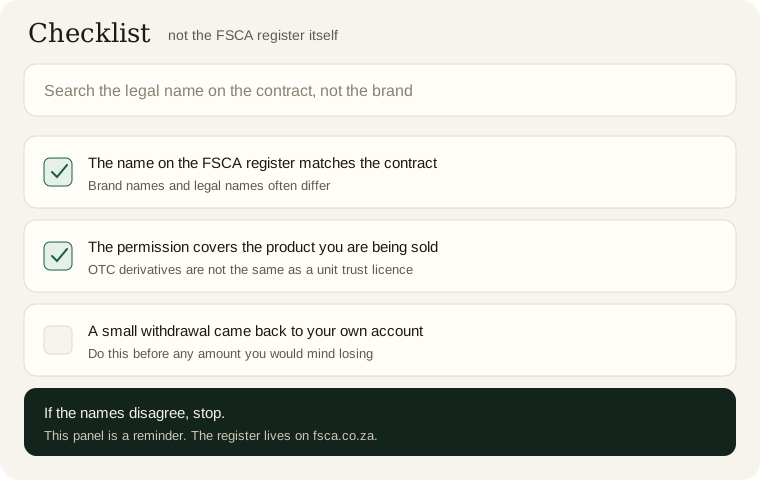
Search the legal name
In South Africa, a firm that offers OTC derivatives to the public is expected to be authorised by the Financial Sector Conduct Authority. Start at the FSCA website and use its own search. Type the legal name from the contract and the application form, not the nickname on the advert and not the name of the person who phoned you.
Then check that the permission covers the product. An authorisation that lets a firm sell unit trusts does not, by itself, let it offer leveraged currency contracts. If the names disagree, or the permission is for something else, stop. Clone firms copy a well-known brand and change the company behind it.
What a licence does not promise
A licence means the firm is inside a supervisory system. It does not mean the firm is pleasant, cheap, or unable to lose your money. Forex and CFDs are built so that a small deposit controls a large pair. You can lose the deposit. On some accounts, if the market gaps, you can lose more than you deposited. Ask the firm, in writing, whether losses stop at zero. Keep the answer.
The FSCA has set margin rules before and can change them. The firm’s current disclosure beats anything a guide remembers about the maximum leverage on offer. You are allowed to use less than the maximum. Using less is the adult choice.
A local firm and an offshore one
A firm licensed here sits inside a complaints path. If it mishandles you, ask which ombud scheme its licence points to, and keep the correspondence. A firm that is only licensed in another country, or in no country you can find, often sits outside that path. Suing a company in an offshore jurisdiction, for a sum that felt large on a Thursday and looks small to a lawyer, is a poor plan.
Sending rands abroad to fund that offshore account is also not the same thing as trading with a local firm. Your bank will ask questions, and the Reserve Bank’s exchange-control rules are the bank’s problem to apply. Read the current guidance on the Reserve Bank site, or ask the bank, before you wire money out. This page is not that advice.
Bonuses and the volume trap
A bonus you cannot withdraw until you have traded a large volume is a cost, not a gift. The volume is often where the firm earns the spread back. Treat a bonus, a “recovery manager”, or a deadline on a phone call as a reason to slow down, not a reason to send more.
The small withdrawal
Before any amount you would mind losing, deposit a small sum and withdraw it back to the same account in your own name. See how long it takes, what documents appear at the last minute, and whether the money arrives intact. A firm that makes the deposit effortless and the withdrawal complicated has shown you the business model.
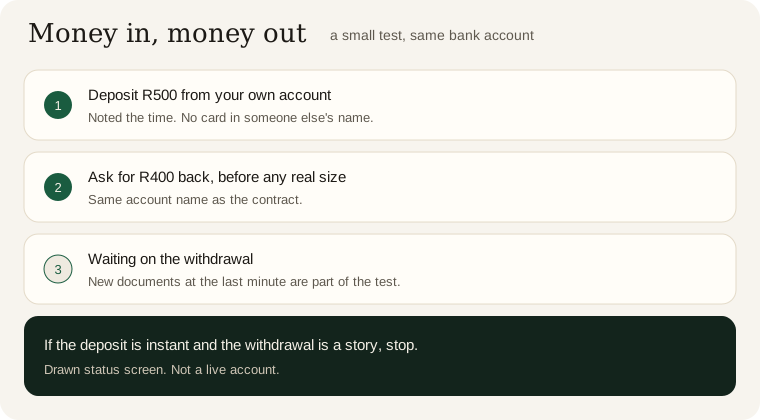
Write down the clock. A deposit that posts in minutes and a withdrawal that is “with compliance” for nine days is a result, even if the money eventually arrives. So is a request for a new selfie, a new proof of address, or a call with a manager before the rand can leave. Do this while the sum is R500, not after it has become rent.
Keep statements. If you do make a profit, SARS may treat it as income, depending on your facts. The SARS site and a tax practitioner who can see your situation are the right next stop. We are not.
A sales desk that will not let you think
- Pressure to deposit today, while a “special” still exists.
- A request to install remote-access software so someone can “help you click”.
- A suggestion that you borrow the deposit.
- A second company, introduced after a loss, that claims it can recover the first loss for a fee.
None of those are a normal part of opening an account. Close the conversation and go back to the register.